๐Ÿฅข Korean Japchae (์žก์ฑ„) โ€” Sweet & Savory Glass Noodles

If youโ€™ve ever tried Korean food, youโ€™ve probably seen Japchae (์žก์ฑ„) โ€” colorful glass noodles stir-fried with vegetables and beef.
Itโ€™s one of Koreaโ€™s most popular dishes, known for its perfect balance of sweet and savory flavors.
Although often served on special occasions, itโ€™s simple enough to make at home.
This recipe will show you how to create the same delicious Japchae with easy steps and ingredients you can find anywhere.

ํ•œ๊ตญ ์Œ์‹์„ ์ข‹์•„ํ•œ๋‹ค๋ฉด ํ•œ ๋ฒˆ์ฏค ๋ดค์„ ์žก์ฑ„!
๋‹น๋ฉด์— ๋‹ค์–‘ํ•œ ์ฑ„์†Œ์™€ ๊ณ ๊ธฐ๋ฅผ ๋„ฃ์–ด ๋ณถ์€ ํ•œ๊ตญ์˜ ๋Œ€ํ‘œ ์š”๋ฆฌ์˜ˆ์š”.
๋‹ฌ์ฝคํ•˜๊ณ  ์งญ์งคํ•œ ๋ง›์ด ์กฐํ™”๋ฅผ ์ด๋ฃจ๋ฉฐ, ๋ช…์ ˆ์ด๋‚˜ ํŠน๋ณ„ํ•œ ๋‚  ์ž์ฃผ ๋จน์ง€๋งŒ ์ง‘์—์„œ๋„ ์†์‰ฝ๊ฒŒ ๋งŒ๋“ค ์ˆ˜ ์žˆ๋‹ต๋‹ˆ๋‹ค.


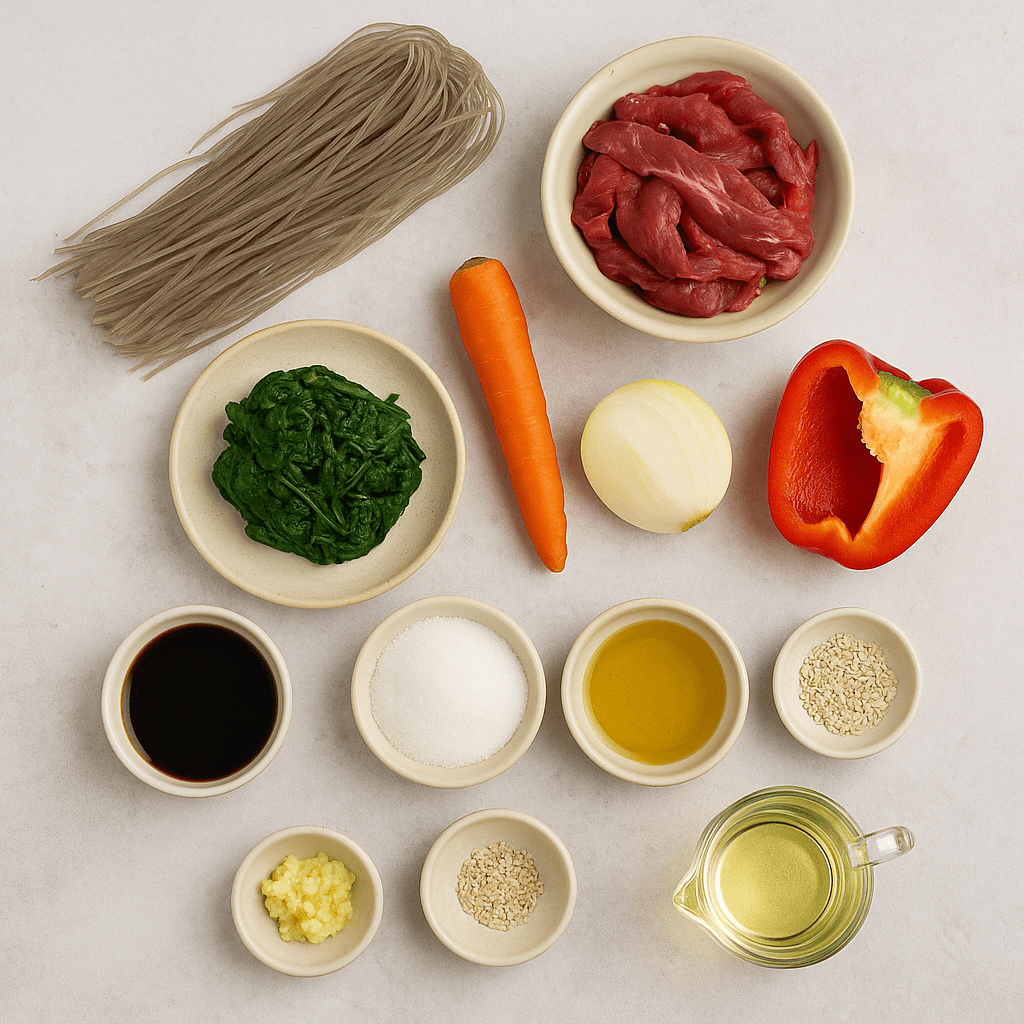
๐Ÿฅ• Ingredients | ์žฌ๋ฃŒ

  • 200 g sweet potato glass noodles (๋‹น๋ฉด)
  • 100 g beef (thinly sliced) (์†Œ๊ณ ๊ธฐ, ์–‡๊ฒŒ ์ฌ ๊ฒƒ)
  • 1 cup spinach (blanched) (์‹œ๊ธˆ์น˜, ๋ฐ์นœ ๊ฒƒ)
  • ยฝ carrot (thinly sliced) (๋‹น๊ทผ)
  • ยฝ onion (์–‘ํŒŒ)
  • ยฝ bell pepper (optional) (ํ”ผ๋ง, ์„ ํƒ)
  • 3 tbsp soy sauce (๊ฐ„์žฅ)
  • 1 tbsp sugar (์„คํƒ•)
  • 1 tbsp sesame oil (์ฐธ๊ธฐ๋ฆ„)
  • 1 tsp sesame seeds (ํ†ต๊นจ)
  • 1 clove garlic (minced) (๋‹ค์ง„ ๋งˆ๋Š˜)
  • Cooking oil for stir-frying (์‹์šฉ์œ )

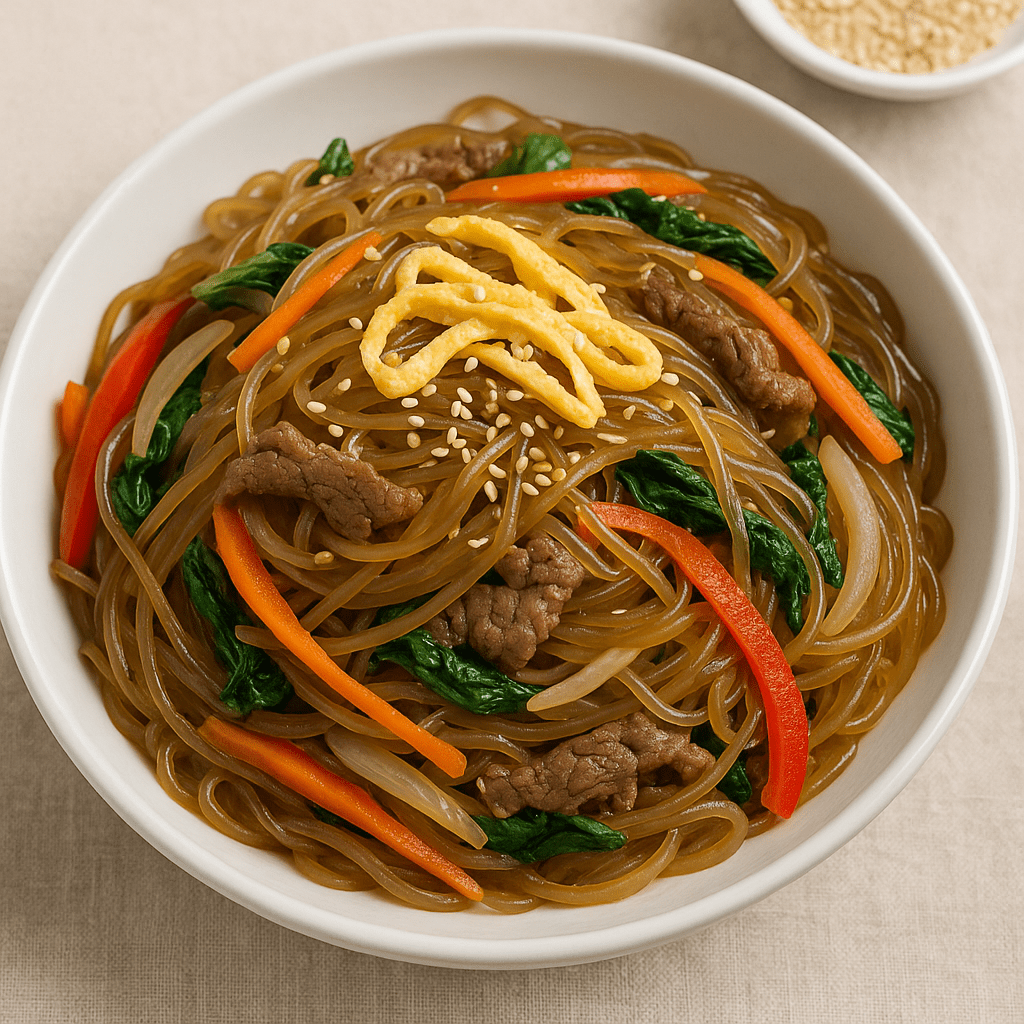
I prepared one more bowl of sesame seeds. They make the dish taste much nuttier, so I like to add a little extra. ๐Ÿ˜Š


๐Ÿณ Instructions | ์กฐ๋ฆฌ๋ฒ•

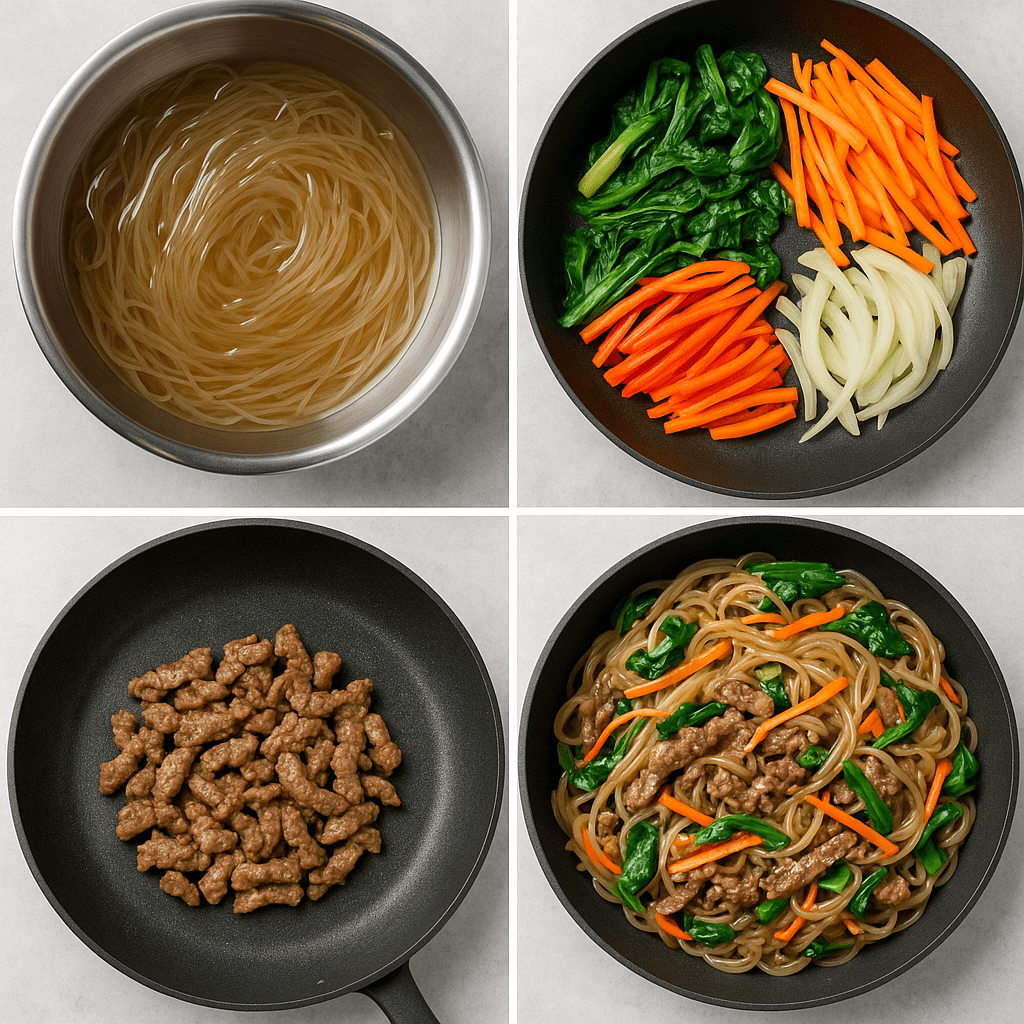
  1. Soak the noodles in warm water for 20โ€“30 minutes, then boil for 6 minutes. Rinse in cold water and drain well.
    ๋‹น๋ฉด์„ 20~30๋ถ„๊ฐ„ ๋ถˆ๋ฆฐ ๋’ค 6๋ถ„ ์ •๋„ ์‚ถ๊ณ  ์ฐฌ๋ฌผ์— ํ—น๊ถˆ ๋ฌผ๊ธฐ๋ฅผ ๋นผ์š”.
  2. Stir-fry each vegetable lightly with a little oil and salt, then set aside.
    ์ฑ„์†Œ๋Š” ์•ฝ๊ฐ„์˜ ๊ธฐ๋ฆ„๊ณผ ์†Œ๊ธˆ์œผ๋กœ ๊ฐ๊ฐ ๋ณถ์•„ ๋”ฐ๋กœ ๋‘ก๋‹ˆ๋‹ค.
  3. Stir-fry beef with soy sauce, garlic, and sugar until cooked through.
    ๊ณ ๊ธฐ๋ฅผ ๊ฐ„์žฅ, ๋งˆ๋Š˜, ์„คํƒ•๊ณผ ํ•จ๊ป˜ ๋ณถ์•„์š”.
  4. Combine noodles, vegetables, and beef in a large pan.
    ํฐ ํŒฌ์— ๋‹น๋ฉด, ์ฑ„์†Œ, ๊ณ ๊ธฐ๋ฅผ ๋ชจ๋‘ ๋„ฃ์Šต๋‹ˆ๋‹ค.
  5. Add soy sauce, sesame oil, and sugar. Stir over low heat for 2โ€“3 minutes until well mixed.
    ๊ฐ„์žฅ, ์ฐธ๊ธฐ๋ฆ„, ์„คํƒ•์„ ๋„ฃ๊ณ  ์•ฝ๋ถˆ์—์„œ 2~3๋ถ„๊ฐ„ ๊ณจ๊ณ ๋ฃจ ๋ณถ์•„์š”.
  6. Sprinkle sesame seeds on top and serve warm.
    ๋งˆ์ง€๋ง‰์œผ๋กœ ํ†ต๊นจ๋ฅผ ๋ฟŒ๋ ค ๋งˆ๋ฌด๋ฆฌํ•ฉ๋‹ˆ๋‹ค.

๐ŸงŠ Storage | ๋ณด๊ด€๋ฒ•

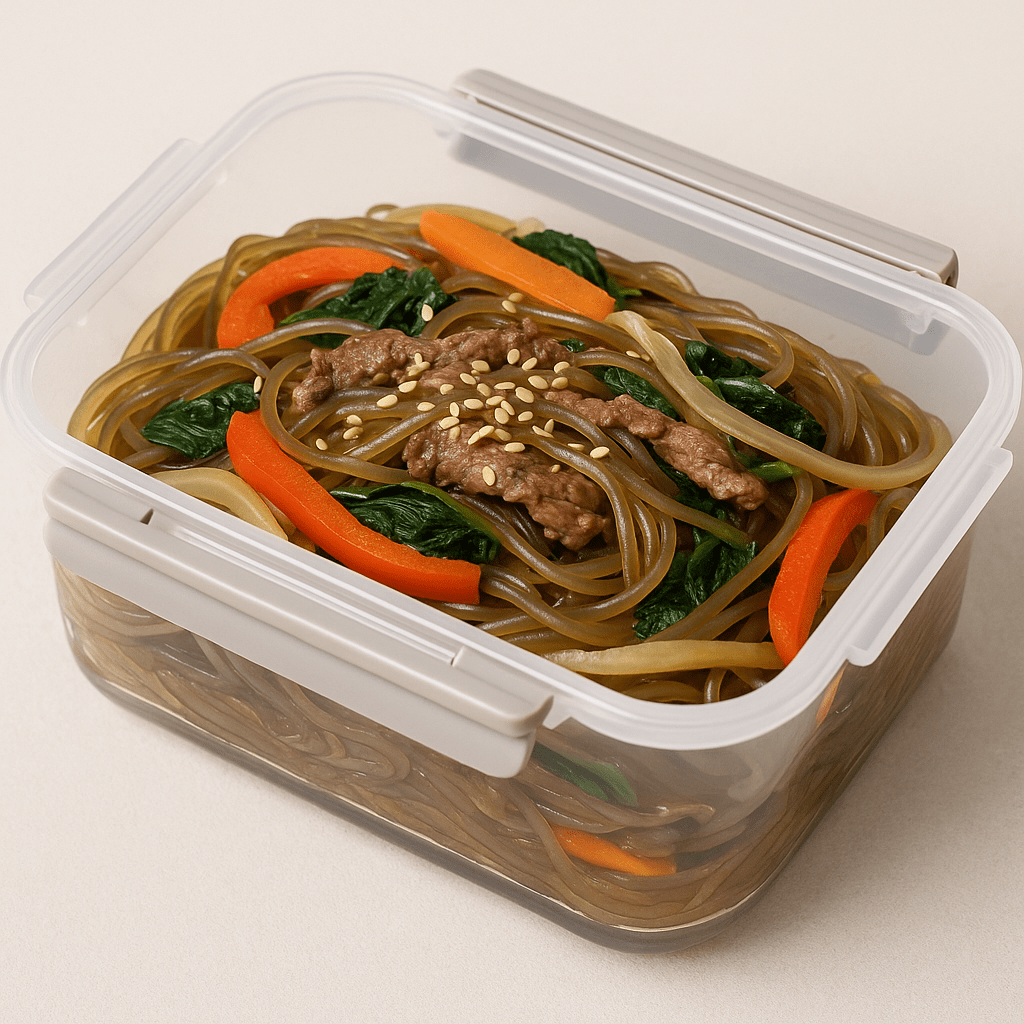
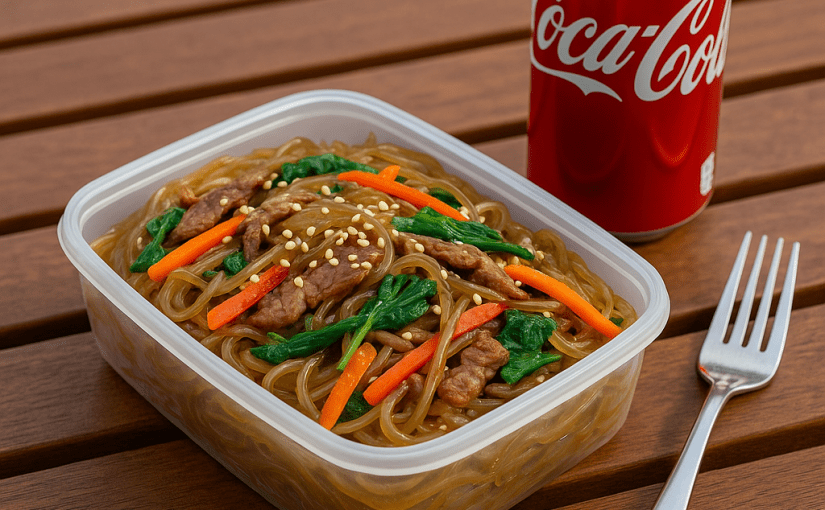
Store leftover Japchae in an airtight container in the refrigerator for up to 2 days.
Reheat in a pan with a few drops of sesame oil for the best flavor.

๋‚จ์€ ์žก์ฑ„๋Š” ๋ฐ€ํ ์šฉ๊ธฐ์— ๋‹ด์•„ ๋ƒ‰์žฅ ๋ณด๊ด€ํ•˜๋ฉด 2์ผ๊นŒ์ง€ ์ข‹์•„์š”.
๋จน๊ธฐ ์ „, ํŒฌ์— ์ฐธ๊ธฐ๋ฆ„ ์•ฝ๊ฐ„์„ ๋‘๋ฅด๊ณ  ๋ฐ์šฐ๋ฉด ์ฒ˜์Œ์ฒ˜๋Ÿผ ๋ง›์žˆ์–ด์š”.


๐Ÿ’ช Nutrition & Health Benefits | ์žก์ฑ„์˜ ์˜์–‘์ •๋ณด์™€ ์ข‹์€ ์ 

Japchae is a balanced dish of noodles, vegetables, and protein.
Sweet potato noodles are naturally gluten-free and provide lasting energy.
Vegetables like spinach, carrots, and onions add fiber, vitamins, and antioxidants, supporting digestion and immunity.
Cooked with minimal oil, Japchae becomes a light yet satisfying meal for any time of day.

์žก์ฑ„๋Š” ๋‹น๋ฉด, ์ฑ„์†Œ, ๋‹จ๋ฐฑ์งˆ์ด ๊ณ ๋ฃจ ๋“ค์–ด ์žˆ์–ด ์˜์–‘ ๋ฐธ๋Ÿฐ์Šค๊ฐ€ ์ข‹์•„์š”.
๋‹น๋ฉด์€ ๊ธ€๋ฃจํ…์ด ์—†๊ณ  ํฌ๋งŒ๊ฐ์ด ์˜ค๋ž˜ ์œ ์ง€๋˜์–ด ์—๋„ˆ์ง€ ๋ณด์ถฉ์— ์ข‹์Šต๋‹ˆ๋‹ค.
์‹œ๊ธˆ์น˜, ๋‹น๊ทผ, ์–‘ํŒŒ๋Š” ์‹์ด์„ฌ์œ ์™€ ๋น„ํƒ€๋ฏผ, ํ•ญ์‚ฐํ™” ์„ฑ๋ถ„์ด ํ’๋ถ€ํ•ด ์†Œํ™”์™€ ๋ฉด์—ญ๋ ฅ ํ–ฅ์ƒ์— ๋„์›€์„ ์ค˜์š”.
๊ธฐ๋ฆ„์„ ์ ๊ฒŒ ์‚ฌ์šฉํ•˜๋ฉด ๊ฐ€๋ณ์ง€๋งŒ ๋“ ๋“ ํ•œ ํ•œ ๋ผ ์‹์‚ฌ๊ฐ€ ๋ฉ๋‹ˆ๋‹ค.


๐ŸŒŸ Cooking Tips | ์š”๋ฆฌ ๊ฟ€ํŒ

  • The noodles absorb sauce quickly โ€” season lightly first, then adjust before serving.
    ๋‹น๋ฉด์€ ๊ฐ„์„ ๋นจ๋ฆฌ ํก์ˆ˜ํ•˜๋‹ˆ ์ฒ˜์Œ์—” ๊ฐ„์„ ์•ฝํ•˜๊ฒŒ ํ•˜๊ณ  ๋งˆ์ง€๋ง‰์— ๋งž์ถ”์„ธ์š”.
  • Add egg strips for extra color and flavor.
    ๊ณ„๋ž€ ์ง€๋‹จ์„ ์˜ฌ๋ฆฌ๋ฉด ์ƒ‰๊ฐ๊ณผ ํ’๋ฏธ๊ฐ€ ๋” ์ข‹์•„์š”.
  • For a vegetarian version, replace beef with mushrooms.
    ์ฑ„์‹ ๋ฒ„์ „์œผ๋กœ๋Š” ๊ณ ๊ธฐ ๋Œ€์‹  ๋ฒ„์„ฏ์„ ์‚ฌ์šฉํ•ด๋ณด์„ธ์š”.

Japchae isnโ€™t just a side dish โ€” itโ€™s a meal on its own.
Sweet, savory, and perfectly satisfying, itโ€™s a dish youโ€™ll never get tired of.
Try making it at home today and bring a taste of Korea to your table ๐Ÿœโœจ

๐Ÿ”ฅ๐ŸฒEasy Korean Tteokbokki (Spicy Rice Cakes Recipe)์ง‘์—์„œ๋„ ์‰ฝ๊ฒŒ ๋งŒ๋“œ๋Š” ๋งค์ฝค๋‹ฌ์ฝค ๋–ก๋ณถ์ด

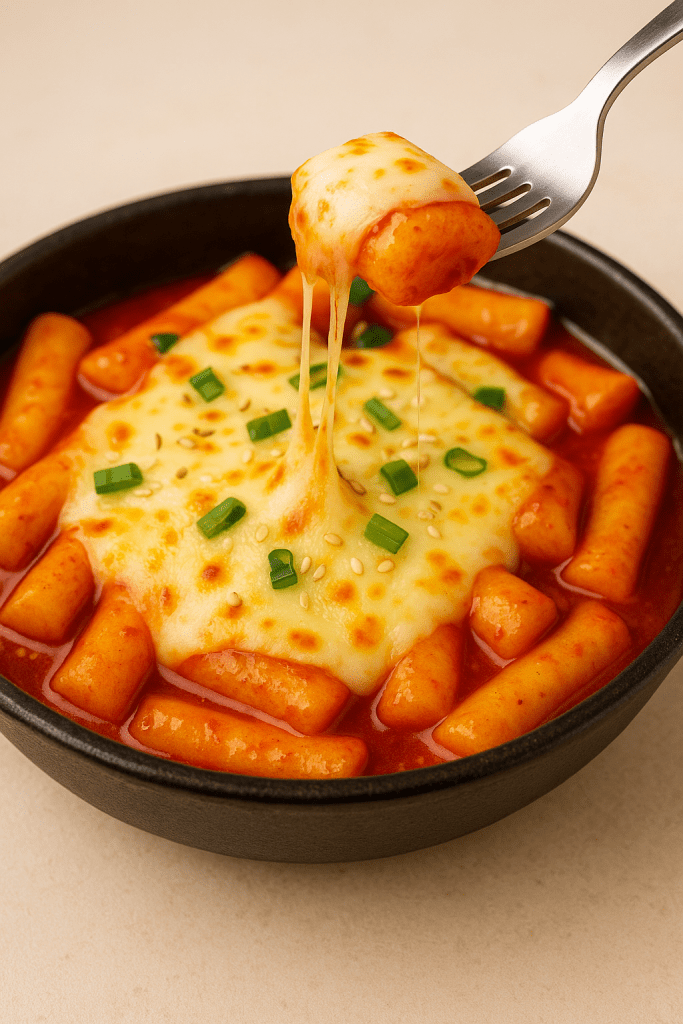
If youโ€™ve ever watched a Korean drama, youโ€™ve probably seen someone eating this bright red, steamy street food. Thatโ€™s Tteokbokki (๋–ก๋ณถ์ด) โ€” soft, chewy rice cakes simmered in a sweet and spicy gochujang sauce.
ํ•œ๊ตญ ๋“œ๋ผ๋งˆ๋ฅผ ๋ณธ ์ ์ด ์žˆ๋‹ค๋ฉด, ๋ถ‰์€์ƒ‰ ์–‘๋…์— ํ‘น ๋‹ด๊ธด ๋–ก๋ณถ์ด๋ฅผ ๋จน๋Š” ์žฅ๋ฉด์„ ํ•œ ๋ฒˆ์ฏค ๋ดค์„ ๊ฑฐ์˜ˆ์š”. ๋–ก๋ณถ์ด๋Š” ์ซ„๊นƒํ•œ ๋–ก์„ ๋‹ฌ์ฝคํ•˜๊ณ  ๋งค์šด ๊ณ ์ถ”์žฅ ์–‘๋…์— ์กธ์—ฌ ๋งŒ๋“  ๋Œ€ํ‘œ์ ์ธ ํ•œ๊ตญ ๊ธธ๊ฑฐ๋ฆฌ ์Œ์‹์ด์—์š”.

The best part? You donโ€™t have to be in Korea to enjoy it. With just a few simple ingredients, you can recreate that authentic flavor right at home.
์ข‹์€ ์ ์€, ๊ผญ ํ•œ๊ตญ์— ๊ฐ€์ง€ ์•Š์•„๋„ ์ง‘์—์„œ ๊ฐ„๋‹จํ•œ ์žฌ๋ฃŒ๋กœ ๊ทธ ๋ง›์„ ๋‚ผ ์ˆ˜ ์žˆ๋‹ค๋Š” ๊ฑฐ์˜ˆ์š”.


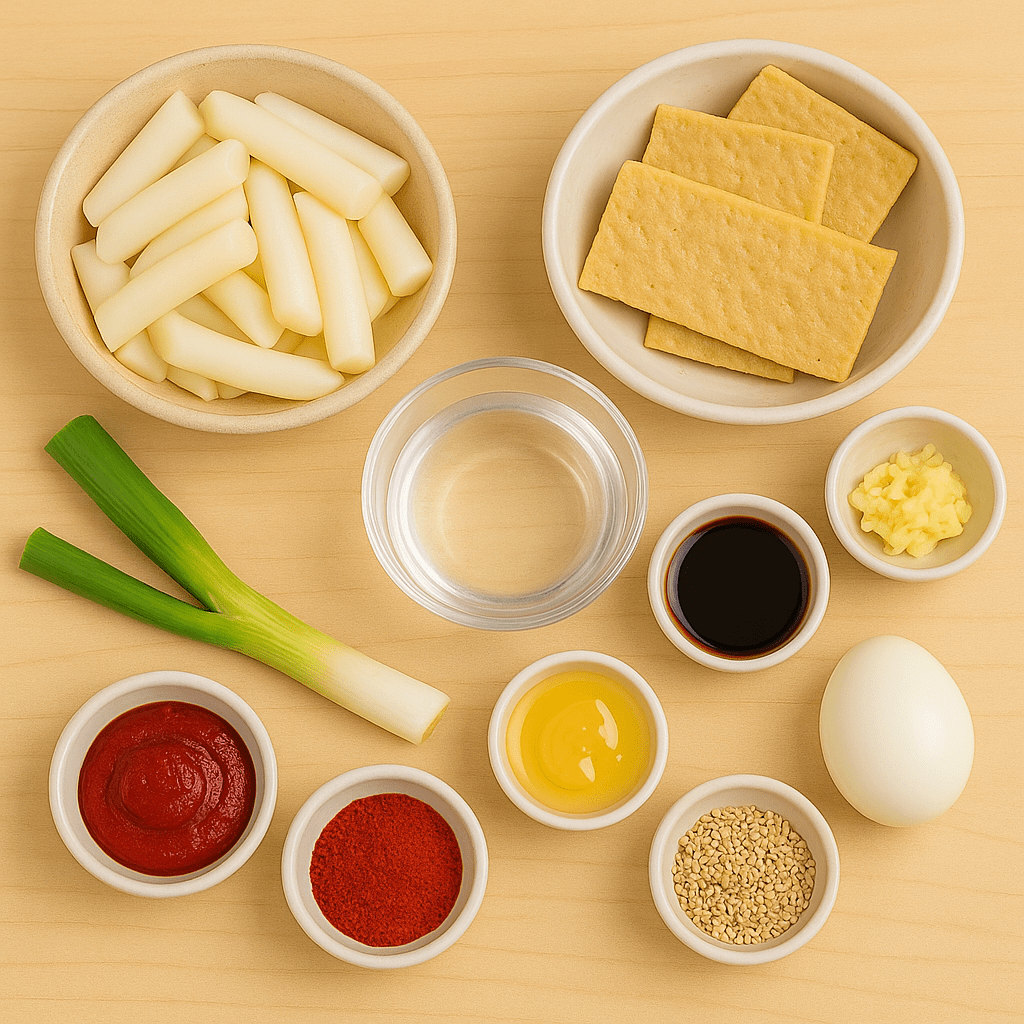
๐Ÿ›’ Ingredients ์žฌ๋ฃŒ

  • Main ์ฃผ์žฌ๋ฃŒ

1ยฝ cups Korean rice cakes (about 200g) / ๋–ก๋ณถ์ด ๋–ก 1์ปต ๋ฐ˜ (์•ฝ 200g)

3โ€“4 fish cakes (or fish tofu sheets), sliced / ์–ด๋ฌต 3~4์žฅ (๋˜๋Š” ํ”ผ์‰ฌ๋‘๋ถ€ ์‹œํŠธ)

1 green onion, cut into 2-inch pieces / ๋Œ€ํŒŒ 1๋Œ€ (5cm ๊ธธ์ด๋กœ ์ž๋ฆ„)

2 cups water or anchovy broth / ๋ฌผ ๋˜๋Š” ๋ฉธ์น˜์œก์ˆ˜ 2์ปต

  • Sauce ์†Œ์Šค

2 tbsp gochujang (Korean red chili paste) / ๊ณ ์ถ”์žฅ 2ํฐ์ˆ 

1 tbsp gochugaru (Korean chili flakes) / ๊ณ ์ถง๊ฐ€๋ฃจ 1ํฐ์ˆ 

1 tbsp soy sauce / ๊ฐ„์žฅ 1ํฐ์ˆ 

1 tbsp sugar / ์„คํƒ• 1ํฐ์ˆ 

1 tbsp corn syrup or honey / ๋ฌผ์—ฟ ๋˜๋Š” ๊ฟ€ 1ํฐ์ˆ 

1 tsp minced garlic / ๋‹ค์ง„ ๋งˆ๋Š˜ 1์ž‘์€์ˆ 

Optional toppings (์„ ํƒ):

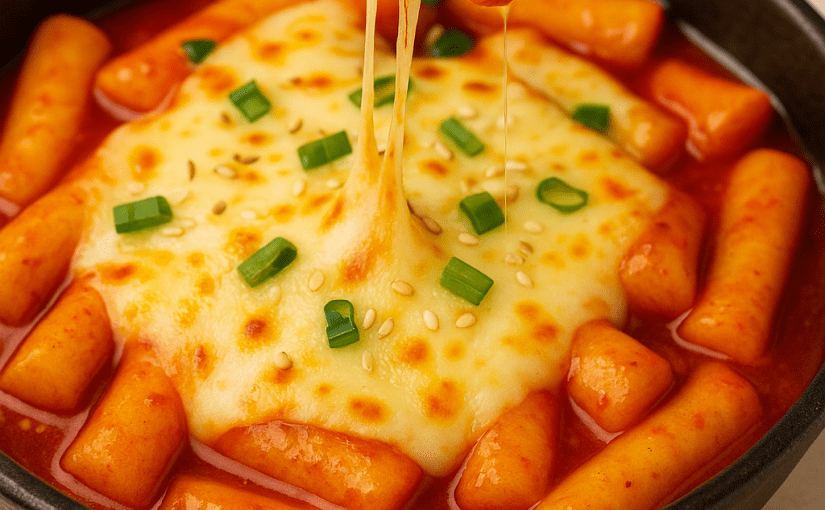
1 boiled egg or ยฝ cup mozzarella cheese / ์‚ถ์€ ๋‹ฌ๊ฑ€ 1๊ฐœ ๋˜๋Š” ๋ชจ์งœ๋ ๋ผ์น˜์ฆˆ ยฝ์ปต

Sesame seeds for garnish / ๊นจ ์•ฝ๊ฐ„


๐Ÿณ Instructions | ์กฐ๋ฆฌ๋ฒ•

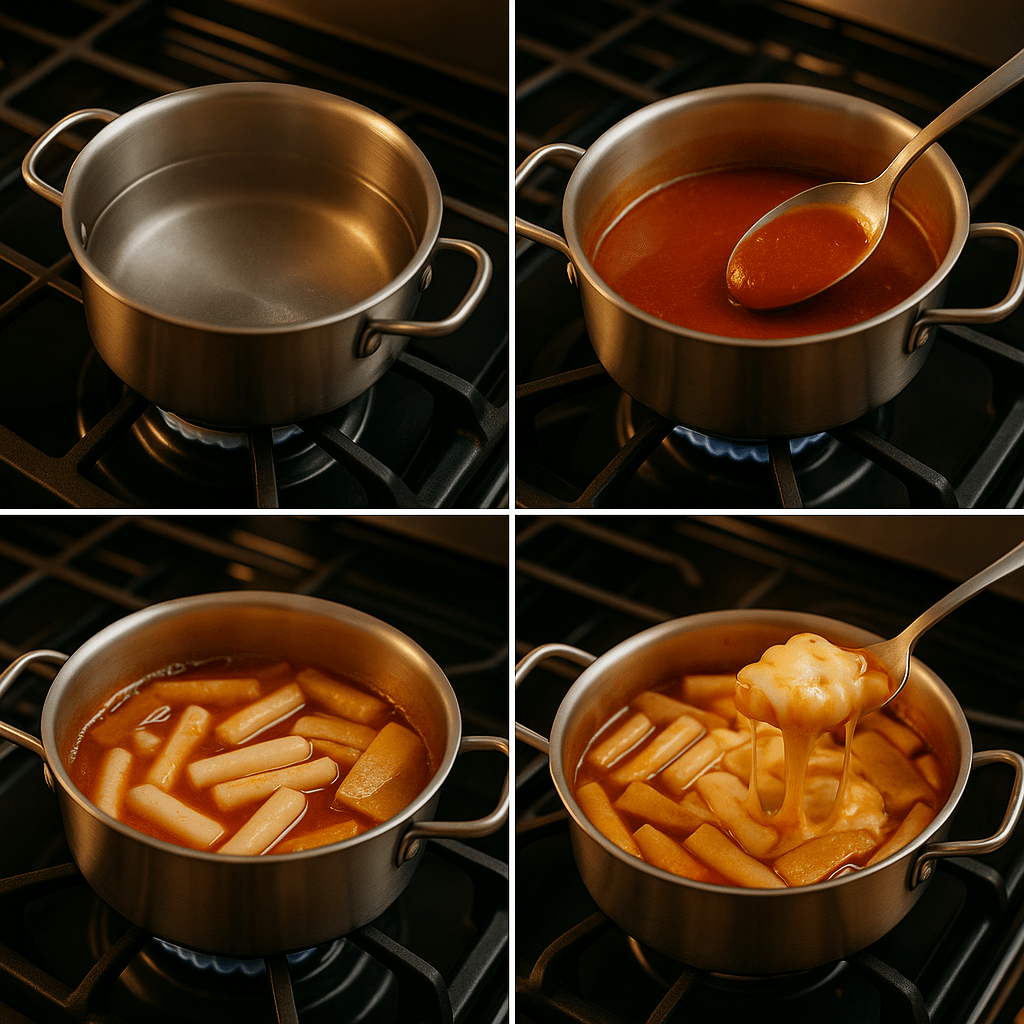
  1. Boil the broth.
    In a medium pot, pour 2 cups of water (or anchovy broth) and bring it to a boil.
    ๋ƒ„๋น„์— ๋ฌผ์ด๋‚˜ ๋ฉธ์น˜์œก์ˆ˜๋ฅผ ๋„ฃ๊ณ  ๋“์ž…๋‹ˆ๋‹ค.
  2. Add the sauce ingredients.
    Stir in gochujang, gochugaru, soy sauce, sugar, corn syrup, and minced garlic. Mix well until smooth.
    ๊ณ ์ถ”์žฅ, ๊ณ ์ถง๊ฐ€๋ฃจ, ๊ฐ„์žฅ, ์„คํƒ•, ๋ฌผ์—ฟ, ๋‹ค์ง„ ๋งˆ๋Š˜์„ ๋„ฃ๊ณ  ์ž˜ ํ’€์–ด์ค๋‹ˆ๋‹ค.
  3. Add rice cakes and fish cakes.
    Once the sauce starts bubbling, add rice cakes and fish cakes. Stir often so they donโ€™t stick.
    ์–‘๋…์ด ๋“๊ธฐ ์‹œ์ž‘ํ•˜๋ฉด ๋–ก๊ณผ ์–ด๋ฌต์„ ๋„ฃ๊ณ  ์ €์–ด์ค๋‹ˆ๋‹ค.
  4. Simmer until thick.
    Cook for about 10 minutes until the sauce thickens and the rice cakes become soft and chewy.
    ์•ฝ 10๋ถ„๊ฐ„ ๋“์—ฌ ์–‘๋…์ด ๊ฑธ์ญ‰ํ•ด์ง€๊ณ  ๋–ก์ด ๋ถ€๋“œ๋Ÿฌ์›Œ์งˆ ๋•Œ๊นŒ์ง€ ์กธ์ž…๋‹ˆ๋‹ค.
  5. Finish with toppings.
    Add boiled egg or cheese, and sprinkle sesame seeds before serving.
    ์‚ถ์€ ๋‹ฌ๊ฑ€์ด๋‚˜ ์น˜์ฆˆ๋ฅผ ๋„ฃ๊ณ , ๋งˆ์ง€๋ง‰์— ๊นจ๋ฅผ ๋ฟŒ๋ ค ๋งˆ๋ฌด๋ฆฌํ•ฉ๋‹ˆ๋‹ค.

๐ŸงŠ Storage / ๋ณด๊ด€๋ฒ•

If you happen to have some leftover tteokbokki (which honestly doesnโ€™t happen often ๐Ÿ˜‹), hereโ€™s the best way to keep it fresh!
ํ˜น์‹œ ๋‚จ์•˜๋‹ค๋ฉด (์‚ฌ์‹ค ๊ฑฐ์˜ ๊ทธ๋Ÿฐ ์ผ์€ ์—†์ง€๋งŒ์š” ๐Ÿ˜‹), ์ด๋ ‡๊ฒŒ ๋ณด๊ด€ํ•˜๋ฉด ์ข‹์•„์š”.

Let it cool completely, then store it in an airtight container in the fridge.
์™„์ „ํžˆ ์‹ํžŒ ๋’ค ๋ฐ€ํ์šฉ๊ธฐ์— ๋‹ด์•„ ๋ƒ‰์žฅ๊ณ ์— ๋„ฃ์–ด์ฃผ์„ธ์š”.

When youโ€™re ready to eat again, add a spoon or two of water and warm it slowly over low heat โ€” itโ€™ll come back soft and chewy like new.
๋จน๊ธฐ ์ „์—” ๋ฌผ ํ•œ๋‘ ์Šคํ‘ผ ๋„ฃ๊ณ  ์•ฝ๋ถˆ๋กœ ์ฒœ์ฒœํžˆ ๋ฐ์šฐ๋ฉด ์ฒ˜์Œ์ฒ˜๋Ÿผ ๋ง๋ž‘ํ•ด์ ธ์š”.

If youโ€™re in a hurry, pop it in the microwave for about a minute, give it a quick stir, then heat again until hot.
๋ฐ”์  ๋• ์ „์ž๋ ˆ์ธ์ง€์— 1๋ถ„ ์ •๋„ ๋Œ๋ฆฌ๊ณ  ํ•œ ๋ฒˆ ์ €์–ด ๋‹ค์‹œ ๋ฐ์›Œ๋„ ๊ดœ์ฐฎ์•„์š”.

I donโ€™t recommend freezing it though โ€” rice cakes turn hard and lose their chewy texture.
๋‹ค๋งŒ ๋ƒ‰๋™์€ ๋น„์ถ”์ฒœ์ด์—์š”. ๋–ก์ด ๋”ฑ๋”ฑํ•ด์ ธ์„œ ์ซ€๋“ํ•œ ์‹๊ฐ์ด ์‚ฌ๋ผ์ง€๊ฑฐ๋“ ์š”.

If you want, you can freeze just the sauce separately for next time!
ํ•„์š”ํ•˜๋‹ค๋ฉด ์–‘๋…์†Œ์Šค๋งŒ ๋”ฐ๋กœ ๋ƒ‰๋™ํ•ด๋‘๋ฉด ๋‹ค์Œ์—๋„ ํŽธํ•˜๊ฒŒ ์“ธ ์ˆ˜ ์žˆ์–ด์š”.

Oh, and for cheese tteokbokki โ€” always add fresh cheese when reheating.
๊ทธ๋ฆฌ๊ณ  ์น˜์ฆˆ ๋–ก๋ณถ์ด๋Š” ๋ฐ์šธ ๋•Œ ์ƒˆ ์น˜์ฆˆ๋ฅผ ์‚ด์ง ๋” ์˜ฌ๋ฆฌ๋ฉด ํ›จ์”ฌ ๋ง›์žˆ์–ด์š”. ๐Ÿง€


๐Ÿ’ก Tips ํŒ

  • If rice cakes are frozen, soak in warm water for 10 minutes before cooking.
    ๋ƒ‰๋™ ๋–ก์€ ๋ฏธ๋ฆฌ ๋”ฐ๋œปํ•œ ๋ฌผ์— 10๋ถ„ ์ •๋„ ๋‹ด๊ฐ€์ฃผ์„ธ์š”.
  • Add a few drops of sesame oil for extra flavor.
    ์ฐธ๊ธฐ๋ฆ„์„ ์‚ด์ง ๋„ฃ์œผ๋ฉด ํ’๋ฏธ๊ฐ€ ๋” ์ข‹์•„์ ธ์š”.
  • Goes perfectly with fried dumplings or kimbap!
    ํŠ€๊น€์ด๋‚˜ ๊น€๋ฐฅ๊ณผ ํ•จ๊ป˜ ๋จน์œผ๋ฉด ๊ถํ•ฉ์ด ์ข‹์•„์š”.

If youโ€™re planning to try making tteokbokki at home, it helps to stop by a Korean grocery store first.

Rice cakes, gochujang, and fish cakes are the key โ€” and once you have them, you can use them for many other Korean dishes too.

They keep well in the fridge and come in handy whenever you want a quick, warm meal with Korean flavor.

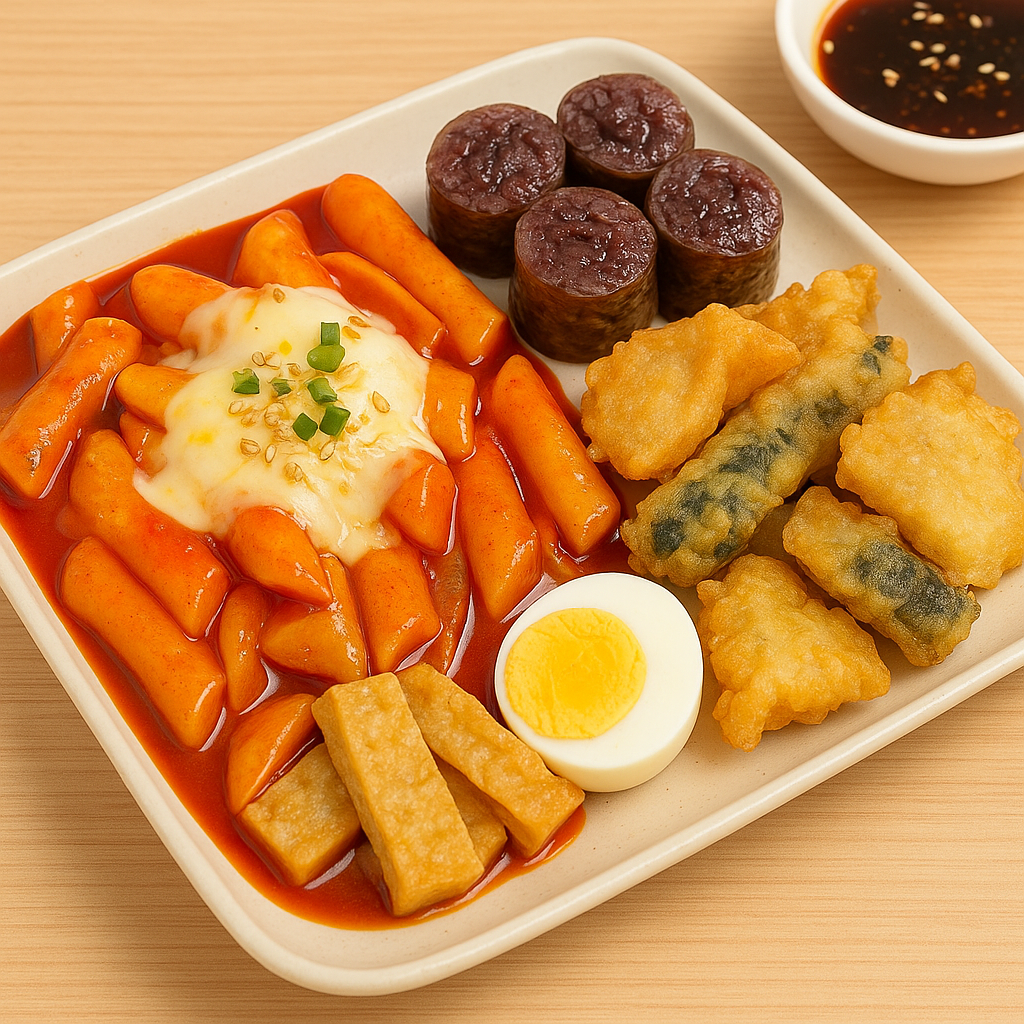
In Korea, tteokbokki is often enjoyed together with soondae (Korean blood sausage) and fried snacks (twigim).